Health · · Yunsuk Choi

1. Context
NUBEQA ARACOG cognition data is the English companion brief for the Korean Daily Issue article. Bayer presented Phase 2 ARACOG head-to-head data at ASCO 2026, reporting less objectively assessed cognitive decline with NUBEQA compared with enzalutamide. The data puts cognition beside efficacy in treatment discussions. The point is not to turn a fast-moving headline into a certainty. The point is to preserve the reported facts, name the conditions that matter, and give readers a practical way to verify the story against official or primary sources.
This article is general information, not medical advice, diagnosis, treatment instruction, financial advice, or a recommendation to buy or sell any asset.
This format is intentionally conservative. It distinguishes what the sources reported from what a reader might do next. That matters because travel rules, medical evidence, technology costs, and market structures can all change after publication. A useful article should help the reader ask better questions rather than create a false sense of completion.
2. Reported facts
| Check | Reported fact |
|---|---|
| Study | ARACOG (AFT-47) Phase 2 randomized head-to-head comparison |
| Sample | Reported as darolutamide n=55 and enzalutamide n=56 |
| Period | Objective cognitive-function assessment over 24 weeks |
| Mechanistic context | The discussion included darolutamide’s relatively lower blood-brain barrier penetration |
The table is a reading aid, not a final decision. Some figures come from company announcements, some from official documents, and some from news coverage. When those sources differ, the safest approach is to treat the official source as the anchor, the company source as detail, and the news source as context.
3. Korea angle
For Korean readers, the article should be treated as a clinical-evidence briefing rather than personal medical advice. A trial result depends on eligibility, comparator, endpoint, follow-up time, and safety monitoring. Even when the science is promising, local approval, reimbursement, physician experience, and hospital access determine whether it can be used in Korea.
The best next step is not self-treatment. It is a better conversation with a clinician: ask whether the reported population matches the patient, what outcome was measured, how adverse events were monitored, and whether the result changes a current standard of care or simply adds another option.
4. Reader checklist
- Write down the patient-specific diagnosis and ask a clinician whether the reported NUBEQA ARACOG cognition data population actually matches it.
- Ask what endpoint was measured, how long patients were followed, and whether the result changes the current standard of care.
- Separate recurrence, response, survival, safety, and quality-of-life outcomes rather than reading one number as the whole result.
- Check local approval, reimbursement, hospital access, and monitoring requirements before treating an overseas study as locally usable.
- Discuss symptoms, tests, medicine changes, and adverse-event monitoring with a qualified clinician before taking any action.
These checks avoid adding new unverified numbers. Dates, fees, eligibility rules, refund rights, health thresholds, security settings, and tax treatment should be verified again at the original source before a final decision. The checklist is meant to slow the decision down just enough to prevent a headline from becoming an unsupported action.

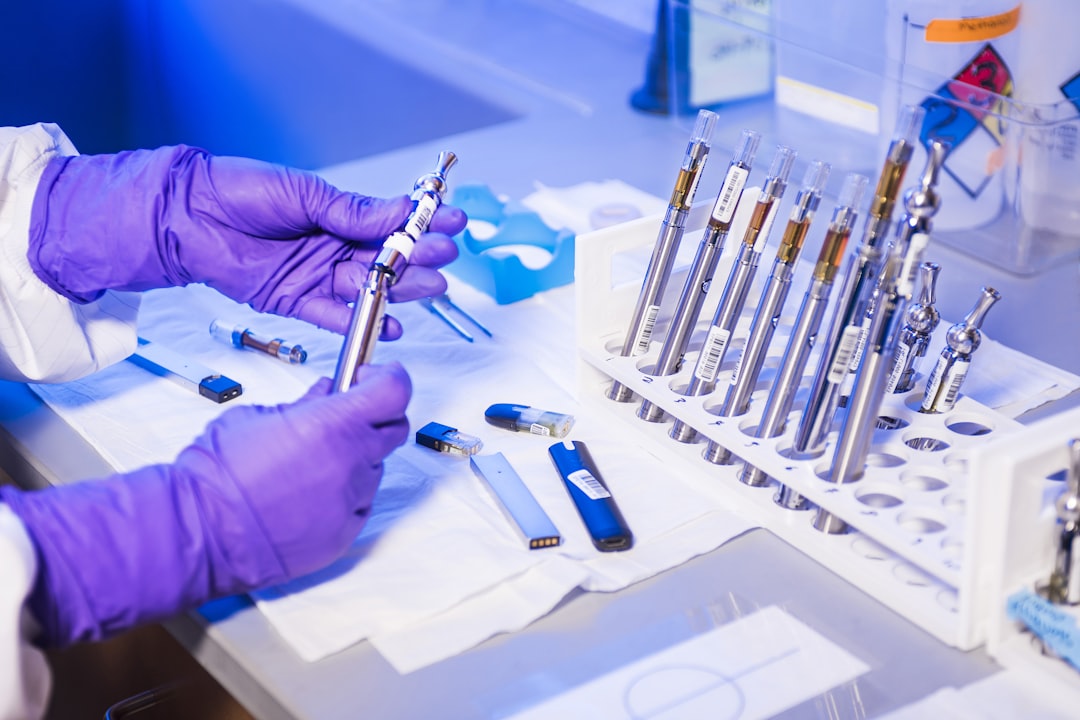
*Photo by Galina Nelyubova on Unsplash*
5. Limits
Medical research can be promising without being directly applicable to every patient, and trial outcomes should not be read as personal prognosis. The remaining risk is interpretation. A source can be accurate and still incomplete for a Korean reader, because jurisdiction, product availability, reimbursement, language support, tax treatment, or account access may differ. Readers should keep the original links close and revisit them when the policy, product, trial, or market condition changes.
6. Takeaways
- NUBEQA ARACOG cognition data is a source-based brief, not a standalone instruction.
- The most important facts are timing, scope, eligibility, cost, and implementation status.
- Korean readers should separately verify local rules, availability, taxes, reimbursement, or operational constraints.
- A cautious checklist is more useful than a confident headline when the information is still moving.
7. Related reading
For more context, see the health category, follow #NUBEQA and #prostate%20cancer, and compare this with Adult Vaccine Record.
8. Disclaimer
Health information depends on diagnosis, disease stage, lab results, other conditions, current medicines, and local clinical access. This post does not tell anyone to start, stop, or change treatment. Symptoms, tests, and medication decisions should be discussed with a qualified clinician.

*Photo by Milad Fakurian on Unsplash*
9. Sources
Sources: Bayer, The ASCO Post, Managed Healthcare Executive
Tags: #NUBEQA #prostate cancer #cognition #ASCO 2026 #darolutamide